


Compare. Book. EZ.


Amata Spring Country Club
Quick Facts
18 holes · Lee Schmidt (Schmidt-Curley) · Exclusive members-only championship venue with iconic island-green par-3; frequent host of elite events.
Course Overview
Amata Spring delivers a world-class presentation: immaculate conditioning, strategic bunkering, and a routing that balances scoring chances with stern, tournament-grade tests. The famous island-green par-3 is emblematic of the course’s theater, but the challenge lies in precision into fast, multi-tiered greens and managing wind across open water. Service and facilities are elite; visitor access is limited to member/guest or special events.
Keeping Score
Choose conservative targets into firm tiers—short-side here is almost always bogey or worse.
Respect the wind on open holes; a low-spin, lower-launch window is often best.
Don’t chase island-green pins—centre of the surface is the smart play.
Policies
Carts standard for play.
Caddies compulsory.
Singles by arrangement through membership.
Dress & etiquette; Strict private-club standards.

Bangpra International Golf Club
Quick Facts
18 holes · One of the region’s oldest layouts; mature, tree-lined fairways; known for testing par-3s and fast, sloping greens.
Course Overview
Bangpra blends classic parkland aesthetics with strategic bunkering and slick, often elevated putting surfaces. Tree corridors demand shaped tee shots to preferred angles; approaches must find the correct shelf to avoid downhill, defensive lag putts. The course rewards conservative targets and tidy short-game technique—chasing tucked pins can snowball quickly. Conditioning is typically firm-fast, and the par-3s punch above their length.
Keeping Score
Centre-green approach strategy saves strokes—three-putt avoidance is huge.
Favour fairway position over raw length; many greens reject from the wrong angle.
Treat par-3s as mini par-4s—bogey avoidance beats hero shots.
Policies
Golf carts available; requirement varies by slot/package.
Caddies compulsory.
Singles accepted, subject to pairing.
Dress & etiquette; Standard country-club code.

Burapha Golf & Resort
Quick Facts
36 holes · Two 18-hole combinations (A/B and C/D) long used for major Thai and regional events; varied terrain with a blend of resort-friendly and championship setups.
Course Overview
Burapha’s four nines provide a wide spectrum of looks: tree-lined holes with gentle elevation, linksy open stretches, and water-guarded finishes. It’s a pace-of-play favorite—generous fairways keep groups moving—yet it retains plenty of bite from the back tees. Greens tend to be large with flowing interior movement; proximity depends on controlling spin and leaving uphill putts. The property’s tournament pedigree shows in its tidy conditioning and option-rich designs that cater to all abilities.
Keeping Score
Play to preferred approach yardages; green tiers can make aggressive pins play smaller than they look.
Cross-winds on exposed holes punish floaty trajectories—commit to window and shape.
On closing holes with water, lay up to full-wedge numbers; avoid half-shots into firm tiers.
Policies
Carts commonly included/required in many packages; confirm on booking.
Caddies compulsory.
Singles accepted subject to tee-sheet.
Dress & etiquette; Standard resort/country-club code.

Chee Chan Golf Resort
Quick Facts
18 holes · Par 72 · Modern championship course at the foot of Khao Chee Chan (“Buddha Mountain”); architect: Golfplan (David Dale). Known for immaculate conditioning and scenic back-nine vistas.
Course Overview
Chee Chan is a polished, resort-championship experience built on broad corridors with expansive views. Fairways are generous but cleverly angled; bold, sculpted bunkers and firm surrounds place the premium on accurate approaches and a tidy short game. Greens are fast and true with distinct sections—distance control and landing-spot discipline are essential. The routing uses subtle elevation and cross-winds to create variety without excessive difficulty; the course is playable for all while fully capable of a stern setup. Service standards are high and practice facilities are comprehensive.
Keeping Score
Use the wind and fairway camber—hugging inside lines often brings bunkers into play.
Aim to the correct green tier; two-putt speed control saves shots.
Take the safe miss on holes playing toward water; recovery zones are usually short and right.
Policies
Carts compulsory; separate cart fee applies.
Caddies compulsory.
Singles accepted subject to tee-sheet management.
Dress & etiquette; Standard resort-championship dress code.

Crystal Bay Golf Club
Quick Facts
27 holes (A/B/C) · Formerly Natural Park Resort · Parkland with extensive water features; classic late-80s styling and generous greens.
Course Overview
Crystal Bay’s challenge lies in approach accuracy and speed control on large, subtly tiered greens. Water pinches landing areas on several holes, encouraging positional tee shots to preferred angles. The layout is fair to all abilities from appropriate tees, with scoring opportunities on reachable par-5s balanced by demanding water-guarded par-3s. Wind direction meaningfully changes strategy across the three nines.
Keeping Score
On water-lined approaches, favour the fat side and accept longer birdie putts.
Distance control matters more than spin—many greens have gentle back-to-front tilt.
Commit to conservative lay-ups on risk-reward par-5s to protect a clean card.
Policies
Carts available; requirement varies by slot/package.
Caddies compulsory.
Singles accepted, subject to pairing.
Dress & etiquette; Standard club policy.

Eastern Star Golf Course
Quick Facts
18 holes · Par 72 · Classic seaside-style layout on gently rolling terrain with wide fairways, plentiful water and palm-framed doglegs; one of only a handful of Thai courses designed by Robert Trent Jones Jr.
Course Overview
Eastern Star Country Club & Resort sits just inland from the Gulf of Thailand on a largely flat, low-lying site that plays very “links-like” when the sea breeze picks up. Fairways are generous but framed by hundreds of mature palms and pockets of flowers, so your tee shots feel inviting rather than cramped. The routing works through a residential estate across roughly 530 acres, with 65 bunkers, 11 lakes and over 2,200 coconut trees shaping sight-lines and landing areas.
Rather than brute length alone, the course leans on doglegs, cross-hazards and water guarding ideal lay-up spots to demand a bit of planning. There are plenty of “thinking golfer” holes where choosing the correct side of the fairway unlocks a far easier approach. Greens are moderately contoured—enough movement to reward good distance control without feeling tricked up—and the ever-present breeze means trajectory and spin control matter as much as raw power. Eastern Star has hosted a number of local and regional tournaments and is set up to be playable for higher-handicappers while still asking good questions of stronger players.
Keeping Score
Tee selection matters. From the back tees the course stretches over 7,100 yards and can feel long into the wind; moving up a tee can turn it from a grind into a fair test that still keeps all the strategy intact.
Play the breeze and the angles. Many holes reward shaping away from water or bunkers to open up better angles in; over-fading or over-drawing into the wind is where doubles live here.
Respect the water and lay-up numbers. With lakes in play on a large number of holes, especially around par-4 approaches and par-5 second shots, picking clear lay-up yardages and favouring full wedges over half-shots will usually save more strokes than the occasional hero carry.
Policies
Caddies: Caddies are compulsory, in line with standard Thai golf practice. Recommended tip levels from booking partners are around THB 400 per round.
Carts: Golf carts are widely available; typical published cart fee is around THB 600 per round (walking with a caddie is generally allowed but most visitors ride in the heat).
Dress & etiquette: Standard Thai resort-course code—collared shirts, tailored shorts or trousers, proper golf shoes; no denim, beachwear or singlets.
Tee times & groups: Open daily, with up to 5 players per group permitted according to partner booking info; singles are usually paired where possible at busy times.

Greenwood Golf & Resort
Quick Facts
27 holes (A/B/C) · Peter Thomson & team · Undulating fairways with pot-bunker defenses and a subtle links-style feel in places.
Course Overview
Greenwood’s design emphasises shot-shaping and precise trajectories over raw power. Fairway contours feed or repel drives; pot bunkers and mounding influence sightlines and landing choices. Approaches demand disciplined yardages to hit the correct green tiers; short-siding brings deep bunkers and tight lies into play. It’s an engaging thinkers’ course: play to preferred numbers, accept centre-green looks when wind is quartering, and keep the ball below the hole.
Keeping Score
Pick conservative tee lines that guarantee a full-spin wedge or 9-iron.
Avoid the down-wind, short-side miss—use the fat side and two-putt.
Pot bunkers near lay-up zones are scorecard magnets—choose lay-up lengths carefully.
Policies
Carts available; requirement varies by slot/package.
Caddies compulsory.
Singles accepted, subject to tee-sheet.
Dress & etiquette; Standard club code.

Khao Kheow Country Club
Quick Facts
27 holes (A/B/C) · Perry Dye design · Valley setting with meaningful elevation changes, fast greens, and water in play on many approaches.
Course Overview
Khao Kheow is a classic Dye challenge: visual intimidation off the tee gives way to strategic angles into demanding, contoured greens. Elevation changes affect club selection more than yardage suggests, and cross-winds amplify mis-hits on exposed holes. The routing mixes generous landing areas with forced-carry moments; discipline on lay-ups and leaving uphill putts is rewarded. Expect slick surfaces and well-placed hazards that defend par without feeling punitive—course management is the separator.
Keeping Score
Take enough club into elevated greens; short-side here is almost always bogey.
Use conservative tee lines to control approach yardages on water-guarded holes.
Commit to a start line on windy ridges—spinny, floaty balls get eaten.
Policies
Carts available; often standard in packages; confirm on booking.
Caddies compulsory.
Singles accepted, subject to tee-sheet.
Dress & etiquette; Standard country-club dress expectations.

Laem Chabang International Country Club
Quick Facts
27 holes (Mountain/Lake/Valley) · Jack Nicklaus Signature · One of Thailand’s premier complexes; frequent professional events.
Course Overview
Three distinct nines give Laem Chabang exceptional variety. Mountain (A) uses elevation to frame tee shots and reward confident lines; Lake (B) weaves around sparkling water with exacting lay-ups and precise wedges; Valley (C) is the stoutest test, stretching longer with more demanding approaches. Across the estate, conditioning is excellent: firm fairways, quick but fair greens, and well-maintained bunkering. Pick the right combination for your group: A/B is scenic and scoreable; B/C emphasizes accuracy; A/C is the stern test. The club’s Nicklaus DNA is clear—strategy and angles outrank sheer power.
Keeping Score
Valley’s length and green complexes ask for one extra club more often than you think.
On Lake, favour conservative lines off the tee to control approach yardages.
Use elevation on Mountain to shape tee shots that feed into fairways.
Policies
Golf cartsAvailable; commonly required within packages or times—confirm on booking.
Caddies compulsory.
Singles accepted subject to pairing.
Dress & etiquette; Standard country-club dress code.
Mountain Shadow Golf Club
Quick Facts
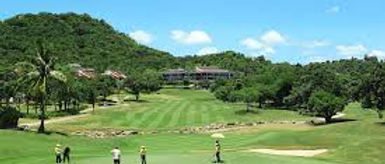
18 holes · Ronald Fream design · Former mango plantation site with strong visual framing, water in play, and fast, contoured greens.
Course Overview
Mountain Shadow offers an old-school strategic test: modest width from the tee with hazards that dictate angles; approaches must carry to firm targets with contour that rejects marginal strikes. The routing mixes tree-lined holes and open stretches where wind influences clubbing. From forward tees it’s friendly, but from the back it asks for precise distance control, particularly on par-3s over water.
Keeping Score
Club up into elevated/into-wind greens—front edges are repellent.
On watery par-3s, favour the big side and two-putt.
Driver is optional when position trumps length.
Policies
Carts available; requirement varies—confirm when booking.
Caddies compulsory.
Singles accepted, subject to pairing.
Dress & etiquette; Standard club policy.

Pattana Golf & Sports Resort
Quick Facts
27 holes (Brookei, Calypso, Melissa) · Tournament-capable complex with stadium-style facilities; GPS-equipped carts; varied elevation and water features.
Course Overview
Pattana offers a modern, well-kept championship experience across three nines. Wide fairways invite confident driving; strategy intensifies at the greens where tiers, run-offs, and surrounding lakes demand precise trajectories. Conditioning is a hallmark—firm, fast, and true. With on-site sports facilities and lodging, it’s a strong base for groups and events. From the tips it’s a serious test; from middle tees it’s fun, fair, and scorable with smart course management.
Keeping Score
On watery par-5s, lay up to full-wedge yardages; avoid partials into slick tiers.
Use wind and fairway camber—inside lines can bring water and bunkers into play.
Commit to the correct green section; two-putt from the right tier protects scores.
Policies
Carts standard/compulsory for visitors (GPS carts).
Caddies compulsory.
Singles accepted, subject to tee-sheet.
Dress & etiquette; Resort standards; tournament-grade marshaling common.

Pattavia Century Golf Club
Quick Facts
18 holes · Par 72 · Approx. 7,100 yards from the tips · Renovated hillside parkland layout with small, fast, back-to-front sloping greens and a dramatic risk-reward closing stretch.
Course Overview
Pattavia Century is laid out over rolling hills inland from Pattaya, routed through jungle-clad slopes and natural ravines rather than flat farmland. Tee shots often play from elevated positions down into framed corridors, with fairways generally well-maintained but rarely dead-flat.
The real defence of the course is the green complexes: compact targets, many falling noticeably from back to front, put a premium on precise distance control and leaving the ball under the hole. Approach shots that finish above the flag can quickly turn into three-putt territory if pace gets away from you.
Each nine mixes a shorter “attacking” par-3 with a much sterner long one, plus a variety of par-4s that alternate between positional doglegs and more open, “let it rip” holes. Par-5s are designed primarily as three-shot holes but still tempt longer hitters to have a go when the wind and lie cooperate. The closing stretch, especially the water-lined, doglegging par-5 18th with its sharply sloping green, is built to create real card-defining drama.
Keeping Score
Play below the hole. With many greens pitched from back to front, your scoring life gets much easier if you favour clubbing that leaves uphill putts rather than chasing back pins.
Treat most par-5s as structured three-shot holes. Layout notes emphasise generous width but demanding green surrounds; a good lay-up yardage and full-wedge number will usually outperform a marginal “all-or-nothing” second.
Allow for hillside lies and stance. The routing through ravines and rolling terrain means you’ll rarely be hitting every approach from a flat stance—build in a simple “ball above feet / below feet” plan for shot shape.
Respect the finish. The 16th and 18th are specifically called out as demanding—long approach requirements and a severely sloped, water-guarded final green mean that accepting bogey rather than forcing hero shots can save a lot of cards.
Policies
(Always double-check before you book, but current published info indicates:)
Holes / Par / Yardage: 18 holes, par 72, approx. 7,111 yards from the back tees.
Location: Between Bangkok and Rayong, roughly 50 minutes from central Pattaya, accessed off Highway 331 through pineapple fields.
Opening: Open daily; standard Thai club operating hours.
Group size: Up to 5 golfers per group on both weekdays and weekends.
Caddies: On-course descriptions assume caddies for all players (standard practice at Thai courses); book with your tee time.
Carts: Available and optional; recent rate sheets list carts at around THB 600 per round—confirm current price when booking.
Practice / facilities: No driving range is listed; basic clubhouse facilities and restaurant service are provided on-site.

Pattaya Country Club
Quick Facts
18 holes · Resort-style layout on gently rolling terrain; wide driving corridors with raised, well-defended greens; minutes from Pattaya.
Course Overview
Pattaya CC is welcoming from the tee yet exacting on approaches. The design invites driver but punishes poor distance control into firm green fronts and false edges. Greens are medium-large with subtle interior movement—leaving uphill putts is key. Pace of play is typically good, and the practice/clubhouse setup is convenient for groups. From the back tees the course holds its own, but it’s especially enjoyable for mixed-ability groups from forward markers.
Keeping Score
Choose tee boxes to keep forced carries honest; the course rewards the right set.
Lay up to full-wedge numbers when fairways narrow into water/trees.
When in doubt, play below the hole—downhill putts can get away.
Policies
Carts commonly required for visitors (one per golfer).
Caddies compulsory.
Singles accepted, subject to tee-sheet.
Dress & etiquette; Standard resort policy.

Phoenix Gold Golf & Country Club
Quick Facts
27 holes (Mountain, Lakes, Ocean) · Resort-championship complex with dramatic elevation changes and wide fairways framed by lakes and sculpted bunkering.
Course Overview
Phoenix Gold spreads across rolling parkland with scenic outlooks and three distinctive nines. The Mountain nine uses elevation to shape tee shots and reward committed lines; Lakes features re-routed holes with engaging water carries and risk-reward par 5s; Ocean blends generous landing areas with tricky approach angles into subtly tiered greens. Conditioning is dependable year-round, with firm fairways and quick, true surfaces. The design favors width off the tee but demands precision into the correct green sections; three-putt avoidance is a prime scoring lever. It’s accessible for mid-caps from forward tees while still offering a stout test from the back markers.
Keeping Score
Play to full-wedge numbers on water-lined holes; half shots into firm tiers bleed strokes.
On elevated tees, match your shot shape to fairway camber rather than forcing carries.
Prioritise green quadrant over pin—centre-green looks often beat short-side misses.
Policies
Carts commonly required/standard for visitors (one per golfer).
Caddies compulsory.
Singles usually accepted, subject to pairing.
Dress & etiquette; Standard resort/country-club dress code.
Pleasant Valley Golf & Country Club
Quick Facts
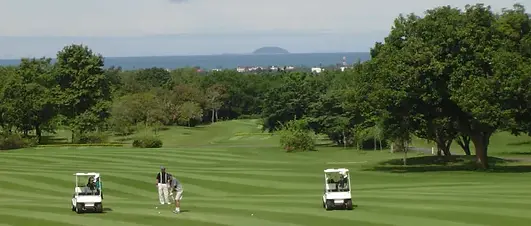
18 holes · Foothills setting near Khao Kheow National Park; scenic routing with water and wind influencing strategy.
Course Overview
Pleasant Valley combines picturesque corridors with a stiffer-than-expected defense at the greens. Tee shots are welcoming, but approaches face water edges, raised fronts, and speed that rewards spin control. The closing holes tighten with hazards that favor disciplined targets over aggressive lines. It’s a favourite for views and variety; bring your lag-putting and a patient mindset.
Keeping Score
Choose conservative tee lines to ensure controllable approaches.
Take extra club into elevated targets; avoid the short-side by using the fat half of the green.
Focus on pace putting—greens can be quicker than they look.
Policies
Carts available; often standard for visitors.
Caddies compulsory.
Singles accepted, subject to pairing.
Dress & etiquette; Standard club code.

Plutaluang (Royal Thai Navy) Golf Course
Quick Facts
36 holes (North/South/East/West) · Mature, wooded terrain wrapped around a large reservoir; classic 1960s styling; abundant wildlife and natural setting.
Course Overview
Plutaluang is old-school Thai golf: tree tunnels, modest fairway widths, and water shaping decisions throughout. The greens are straightforward but firm enough to reward clean strikes; misses feed into chipping hollows and rough. Each nine has a slightly different character, with the reservoir creating scenic carries and cross-winds. It’s an enjoyable, value-friendly walk/ride with a strong nature vibe—less manicured than resort courses but rich in character.
Keeping Score
Favour fairway position over length—angles into simple green complexes matter.
When wind funnels across the reservoir, take an extra club and a conservative line.
Accept par on tight doglegs—hero shots often bring big numbers.
Policies
Carts available; usage varies by time/slot—confirm on booking.
Caddies compulsory.
Singles often accepted, subject to pairing and pace control.
Dress & etiquette; Standard Thai course etiquette; military-run facility norms apply.

Rayong Green Valley Country Club
Quick Facts
18 holes · Par 72 · Classic “hilly parkland” layout between Pattaya and Rayong, with natural elevation, rock outcrops and sloping fairways. Designed by Peter Thomson and opened in 1992 as the original sister course to St Andrews 2000.
Course Overview
Rayong Green Valley Country Club is built over naturally rolling terrain where the designer has kept a lot of the original contours – hills, rock outcrops and side-sloping fairways were preserved and then shaped into the golf holes rather than flattened away. The club itself even describes it as a “hilly golf course with hilly greens,” which is exactly how it plays: generous views from elevated spots, but plenty of side-hill and uphill/downhill lies to deal with.
The layout is a full 18-hole championship course set in countryside between Rayong town and Pattaya, so it feels more rural than city-edge resort. Fairways are generally framed by mature vegetation rather than housing, and the challenge comes less from forced carries and more from stance, angle and green contour. The greens are relatively compact and have movement that can be hard to read; picking the right quadrant and controlling spin becomes more important than simply hitting the surface.
A sizeable clubhouse complex anchors the property, with additional facilities on-site including polo and equestrian amenities, reinforcing the feel of a multi-sport country club rather than a pure “golf-only” venue.
Keeping Score
Tee selection matters. With natural elevation and sloping fairways, choosing a tee that keeps approach clubs sensible into uphill/downhill targets is more important than chasing back-tee yardage.
Favour position over angle-fighting heroics. Many fairways tilt or fall away; a controlled tee shot to the “flat” portion of the landing area beats extra distance into a side-hill stance.
Treat small, contoured greens with respect. Aim for the safe half of the green first; use pin-high as the main goal and accept longer first putts rather than flirting with short-sided misses.
Allow for roll and trajectory. With elevation changes and firmish slopes, distance control with wedges and mid-irons is key—flight the ball and expect some bounce and release into certain targets.
Policies
The official Rayong Green Valley / St Andrews 2000 group site focuses mainly on course descriptions, facilities and promotions, and does not clearly spell out detailed play policies (such as whether carts are compulsory, exact caddie rules, or specific singles/pairing policies) in the public text.
You can safely assume standard Thai private-club etiquette (modern golf attire, caddie service available, and carts offered), but for exact rules, current pricing, and any compulsory cart/caddie requirements, it’s best to confirm directly with the club or through their official booking channel linked on the site.

Siam Country Club - Old Course
Quick Facts
18 holes · Par 72 · Championship parkland layout with mature trees, strategic bunkering and fast, contoured greens. Frequent host venue for top women’s events. Renovated to modern standards while preserving the classic routing and feel.
Course Overview
The Old Course is Pattaya’s “traditional championship” experience: tree-lined corridors demand positional tee shots, with angles into raised, well-protected greens far more important than raw distance. Fairways are framed by classic, flashed-face bunkers; short-siding leaves a delicate recovery to slick, multi-tiered targets. Conditioning is consistently elite thanks to extensive tee-to-green rebuilds and modern agronomy—expect tight lies around the greens, true roll, and tournament-grade speeds in season. The course rewards disciplined course management: favor the wider side of fairways to open green angles, play below the hole, and accept that stress-free pars often beat over-aggression. Facilities, practice areas, and operations are all run to tour standards.
Keeping Score (signature stretches & tips)
The closing stretch (16–18) is a card-defining run with demanding approach shots and championship-speed surfaces—take conservative lines and protect par.
Play for full-spin yardages into firm green fronts; bump-and-runs can work when approaches miss on the safe side.
Driver isn’t mandatory on every hole—fairway wood or long iron can be a smarter play to preferred angles.
Policies
Carts compulsory; one cart per golfer; carts are operated by caddies.
Caddies compulsory.
Singles usually accepted, subject to tee-sheet availability.
Dress & etiquette; Standard championship-course dress code; marshal enforcement typical.

Siam Country Club - Plantation
Quick Facts
27 holes · Par 108 (3 nines) · Championship complex built for tournament play, with dramatic elevation changes and bold bunkering.
Course Overview
Plantation is built on a grand scale: elevated tees, sweeping fairways, and strong visual framing create an arena-like test that encourages confident driving but punishes misses with deep, sculpted bunkers and run-offs. Greens are expansive and multi-sectioned; finding the correct quadrant is critical to avoid three-putts. The wind is a frequent factor on exposed holes, and elevation makes club selection tricky. Conditioning is tour-quality, with firm-fast surfaces rewarding trajectory control. The three nines can be set up in multiple combinations, but each features risk-reward holes where disciplined targets beat hero lines.
Keeping Score
On elevated tee shots, choose a shape that fits the fairway camber; avoid taking on carry bunkers downwind unless you own the number.
Approach play is all about pin quadrant—favor middle distances that allow spin and height.
Accept centre-green putts when out of position; three-putt avoidance is a major scoring lever.
Policies
Carts compulsory; one per golfer.
Caddies compulsory.
Singles usually accepted, subject to pairing and pace control.
Dress & etiquette; Standard SCC dress expectations; tournament-grade marshaling.

Siam Country Club - Rolling Hills
Quick Facts
18 holes · Par 72 · Contemporary championship layout with visually striking hazards and memorable risk-reward par-5s; designed for tournament theater and spectator flow.
Course Overview
Rolling Hills combines width off the tee with aggressive contouring and dramatic bunkering that dictates angles. Signature risk-reward holes tempt longer hitters to challenge carries for a shorter, cleaner approach; conservative lines are always available but leave tougher green complexes. The widely discussed “wall-style” hazard complexes are more about framing and strategy than brutality—smart placement opens up receptive landing areas. Greens feature pronounced contour; proximity is earned by controlling spin, trajectory, and side-to-side slopes.
Keeping Score
Choose a tee that keeps forced-carry decisions honest; the course rewards the right set.
On risk-reward par-5s, lay-up numbers matter more than hero lines—favour full wedges.
Read the interior movement on greens; dying speed is your friend.
Policies
Carts compulsory.
Caddies compulsory.
Singles usually accepted, subject to pairing.
Dress & etiquette; Standard SCC policy.
Siam Country Club - Waterside
Quick Facts
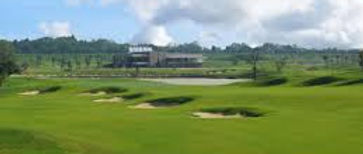
18 holes · Par 72 · Modern resort-championship design emphasizing playability off the tee with demanding second shots into contoured green sites.
Course Overview
Waterside offers generous landing areas that invite driver, but the scoring challenge appears at the greens: false fronts, subtle shelves, and well-placed hazards ask for precise trajectories and spin control. The routing uses gentle elevation and water features to create strategic choices rather than penal carries. In typical SCC fashion, surfaces are immaculate—firm fairways and true greens—so high-quality contact is rewarded. The course suits all abilities: it’s friendly for the first-timer yet fully capable of a stern tournament setup with tucked pins and speed.
Keeping Score
Drive to your preferred approach yardage; Waterside is a second-shot course.
Favour the fat side of greens when wind is quartering; up-and-downs can be awkward from shaved banks.
Take your medicine if you short-side—bogey is better than a big number.
Policies
Carts compulsory; one per golfer.
Caddies compulsory.
Singles usually accepted, subject to the sheet.
Dress & etiquette; Standard SCC dress code.

St Andrews 2000 Golf Club
Quick Facts
Holes / Par: 18 holes · Par 74 (includes two par-6s, which is very rare).
Designer / Opened: Designed by Desmond Muirhead, opened in 2000.
Layout style: Dramatic, “modern links-inspired” layout with elevated tees/greens, tight landing zones, big contour and aggressive bunkering.
Location: Ban Chang, Rayong, roughly 40–45 minutes from Pattaya, part of the same complex as Rayong Green Valley and Silky Oak.
Facilities (shared complex): Clubhouse with restaurant/bar, locker rooms, pro shop and on-site resort accommodation.
Signature feature: Two full par-6 holes plus some huge elevation drops and forced carries that make it one of the more “extreme” scorecards in Thailand.
Course Overview
St Andrews 2000 was built to feel like a Thai take on a Scottish-style, wind-exposed test, but with modern resort drama turned up: big elevation changes, deep ravines, bold bunkering and greens with plenty of slope. The terrain was originally rubber and plantation land, reshaped into a course that constantly changes look and angle from tee to tee.
From the back tees (around 7,700+ yards), it’s aimed at strong players who enjoy forced carries and long-iron approaches. Forward tees take some of the brutality out but still leave you with tight landing areas and demanding second shots, especially on the par-5s and par-6s.
Greens are generally large with noticeable internal movement. Misses in the wrong spots often leave awkward pitches over bunkers or from shaved run-offs. The two par-6 holes are the headline: played well they can be genuine scoring chances; played poorly they become true “card-wreckers” with water and fairway hazards waiting for greedy lines.
Keeping Score
Tee choice & expectations
Treat St Andrews 2000 as a “big-boy test”: if you don’t regularly hit it long and reasonably straight, move up a set of tees.
Think of par-6s as extended par-5s: build the hole backwards from a favourite wedge distance rather than chasing the green in as few swings as possible.
Strategy around the course
Off the tee: many holes give you elevated views with obvious trouble. Choose clubs that keep you short of ravines or narrow necks rather than always pulling driver.
Approach play: the safest line is usually into the fattest quadrant of the green, not the tucked pin—especially when you’re playing from a hanging lie or after a lay-up.
Recovery: when out of position, the smart play is often a pitch back to the widest part of the fairway rather than trying to carry bunkers or ravines.
On and around the greens
Expect big, sloping surfaces; long putts are common. Favour speed control over dying everything at the hole.
Short-sided misses are punished—on many greens it’s better to leave a longer uphill putt than a delicate downhill chip.
Policies & Practical Stuff
(Exact details can vary by season and package; below is what the partner sites and local operators consistently report.)
Carts: Golf carts are compulsory at St Andrews 2000.
Caddies: Caddies are required (standard for Thailand). Fees are usually bundled or paid separately, with a recommended tip around THB 400 per round.
Dress code: Standard Thai championship-course etiquette—collared shirt, tailored shorts/trousers, golf shoes, no jeans or beachwear (various partner sites mention standard golf dress).
Who it suits:
Best for single-digit and strong mid-handicaps who enjoy a challenge and don’t mind a few high-risk shots.
Higher handicaps can still enjoy it from forward tees, but should treat it as a “bucket-list” experience and focus on smart lay-ups rather than target score.

The Emerald Golf Club
Quick Facts
18 holes · Par 72 · Classic parkland / “emerald” jungle-style layout on gently rolling terrain, with elevation changes, doglegs and small, well-protected greens. Originally designed by Nick Faldo & Desmond Muirhead (as Rayong Century), renovated and operated today as The Emerald Golf Club.
Course Overview
The Emerald plays like an old-school shot-maker’s course rather than a resort bomber’s track. Fairways are generally narrow compared with modern Pattaya layouts, framed by mature trees, jungle rough and occasional rocky outcrops. Shorter par-4s and reachable par-5s tempt aggressive lines, but most landing areas pinch at typical driver distances and are guarded by fairway bunkers or sloping lies.
Greens are on the smaller side, often elevated with run-offs and simple but effective contour—miss in the wrong place and getting up-and-down becomes a real challenge. The routing moves through quiet, natural valleys with a couple of holes playing noticeably up- or downhill, so club selection and trajectory control matter more than raw distance. When it’s firm and fast, balls can run into trouble quickly if you don’t work with the slopes.
Keeping Score
Pick the right tee – Emerald is not especially long on the card, but tight lines and wind can make it play much bigger. Choose a set that lets you hit more than just long irons into every green.
Favour position over power – many par-4s reward a fairway wood or hybrid to a favourite yardage rather than driver into narrowing corridors.
Aim for the fat side of greens – small putting surfaces with drop-offs mean middle-of-green targets often outperform flag-hunting.
Manage side-hill lies – sloping fairways are common; planning your shape against the camber is as important as yardage.
Treat par-5s as scoring holes – several are reachable or offer simple lay-up options if you keep the tee shot in play.
Policies
(Always double-check close to your tee time, as policies can change.)
Caddies: Compulsory with standard Thai tipping customs.
Carts: Available; often recommended in heat, but walking may be allowed depending on conditions and tee time.
Dress code: Typical Thai club standards – collared golf shirt, tailored shorts/trousers, golf shoes; no denim, vests or beachwear.
Play: Visitors welcome; advance booking via club / agents recommended, especially weekends and holidays.

Treasure Hill Golf & Country Club
Quick Facts
18 holes · Countryside setting with significant elevation, tight landing areas, and bold green surrounds; regarded as one of the sterner local tests.
Course Overview
Treasure Hill trades resort forgiveness for shotmaking: tee shots must find position to open green angles, and approaches face elevation, wind, and protective bunkering. Greens feature contours and run-offs that funnel misses into tricky recoveries. The course rewards patience and conservative strategy—bogeys are fine; big numbers lurk for over-aggression. Tranquil, rural scenery and low housing footprint amplify the “golf-only” vibe.
Keeping Score
Plot the hole backwards—favour lay-ups to full wedges rather than chasing hero carries.
Take spin-friendly clubs into firm, elevated greens; low, running recoveries can work from the safe side.
Accept centre-green when wind is up; scrambling from shaved banks is high-risk.
Policies
Carts available; commonly used/required for visitors—confirm when booking.
Caddies compulsory.
Singles accepted subject to pairing.
Dress & etiquette; Standard club policy.
